Social Media Strategies 101: The Ultimate
Resource in 2016
On April 28, 2016 The
Cañada College Business Department and E-Center hosted a workshop on social
media strategies that was open to all students and the local community. The
workshop was an interactive approach to learn how social media strategies can
be designed and implemented by small businesses and entrepreneurs.
 |
| Flyer for the event, designed by Anne Kong |
The E-Center brought in
guest presenters Jeanette Gibson and Petra Neiger for this special occasion.
Jeanette Gibson (@JeanetteG on twitter) is a digital
marketing executive, who has worked at both Hootsuite and Cisco, and currently
does consulting work. Petra Neiger (@petra1400 on
twitter) also used to work at Cisco, and has extensive experience with
navigating the ever-changing field of social media while working for Silicon
Valley startups, and is now the founder and CEO of redpantz.
The workshop started with
the presenters asking the attendees, a fair mix of both students and local
entrepreneurs, what specific questions about social media they were hoping to
get answered by the workshop. They covered all of these questions, and then some!
Petra and Jeanette focused on the importance of having SMART objectives for developing a social media strategy to improve a business. If you are using social media for the first time, it is imperative to have a strategy going in. If you're not clear on what SMART objectives are, it is an acronym that stands for Specific, Measureable, Attainable, Relevant, and Time Based goals in project management. These objectives are particularly relevant when tackling social media, and you continually refer to these SMART objectives throughout the process.
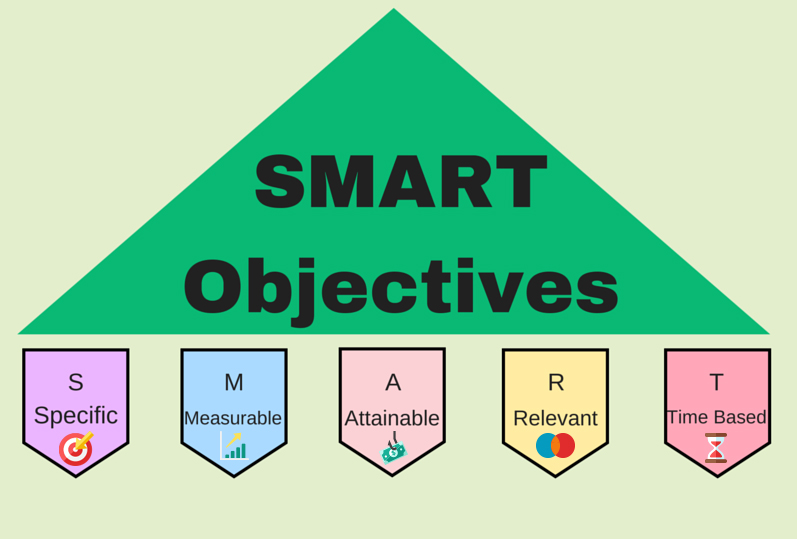 |
| SMART Objectives are key to successful project management. |
The presenters shared many free tools that are available online for anyone to use- if you know where to find them. I'll share the links at the bottom of this post for the free ones. These tools are helpful in making sure you as a business owner stay focused on your SMART objectives, and get the most out of using social media for your business.
Social media has changed
the marketing landscape, and what used to be a rather linear path, akin to a
funnel of customer attraction and retention, is now a looped route. This
change is the direct result of the importance of the loyalty loop, which is how
a brand or business interacts with their consumers before and after the buy.
Social media is the most useful tool to engage in this loyalty loop, and for
some businesses it is the lynchpin upon which you can build your business from
the ground up.
 |
| The Loyalty Loop explained. |
After learning about the
loyalty loop, Petra and Jeanette gave attendees a breakdown on Social Media
Governance, or rather the dos and don’ts of social media interactions. They
focused on the importance of transparency in the usage of social media, and how
to engage with the loyalty loop in an efficient and effective manner. They also
gave guidance on how to deal with customers who are upset and complain on
social media, which is not a matter of if, but when. It is important to have a
strategy with how to deal with this before it happens so that you are prepared.
Your response can actually be an effective way to show that you brand has
ethical business values, which is always an added value to your brand.
 |
| Jeanette Gibson discussing the topic of Social Media Governance. |
The presenters gave attendees a clear breakdown on how to measure social media
ROI (That's return on investment, to make sure you are getting your money's
worth when you invest in social media as a business), and how to improve it.
The key here is to stay organized, some of the links to the free tools
I’m including at the bottom of this will be helpful with measuring your ROI.
One of the most interesting
perspectives from the workshop was during this part of the presentation.
Jeanette Gibson explained the process of reporting ROIs while she worked at
Hootsuite, on Hootsuite’s own social media ROI. Hootsuite is a free and
expedient social media management system that allows you to manage your social
media accounts across multiple platforms. It was very meta to get
this inside perspective on measuring social media ROI from a product that is
used for managing multiple social media platforms.
Petra got into the main-focus of the workshop, which is the process to design and implement your own social media strategy. There is a simple 4-step framework to follow that will help you get the most out of your social media strategy, and these steps are Listen, Attract, Engage, and Convert.
Petra got into the main-focus of the workshop, which is the process to design and implement your own social media strategy. There is a simple 4-step framework to follow that will help you get the most out of your social media strategy, and these steps are Listen, Attract, Engage, and Convert.
Listening is the first step in this process, and it involves research of the conversations happening around the area of business you are trying to get a slice of. It’s imperative that you do your research, and competitor analysis, before engaging so you know the appropriate way to engage. What is the conversation like that is already happening? Think about how you can add to it. This directly ties into making the most out of your SMART objectives, and can actually be instrumental in helping you adjust them, and developing realistic expectations. What you discover during this phase will be used as leverage to increase your reach and success. This step also never really stops; industries change, and it is best to be aware of what is on the horizon so that you can be ahead of the curve.
Attract is the second step in this framework, and mostly involves creating original content for you to share and advertise your brand or business. Equally important in this step is complementing your own original material with other brands or businesses that are already established social influencers. Social media and marketing experts know the importance of community, and attracting people to your own business is not just about making your posts “ME ME ME,” but rather engaging with the larger community, and adding your voice to the buzz. Consumer’s attention span is decreasing everyday, and in the over saturation of the amount of media that is out there, it is important that you use the knowledge gained during the listening phase to see how you can make your business stand out from your competitors. When creating your own content, you need to think outside of the box and utilize unique storytelling techniques. This is key in opening the door to the crucial loyalty loop; you need to get a consumer’s attention, and keep it.
Attract is the second step in this framework, and mostly involves creating original content for you to share and advertise your brand or business. Equally important in this step is complementing your own original material with other brands or businesses that are already established social influencers. Social media and marketing experts know the importance of community, and attracting people to your own business is not just about making your posts “ME ME ME,” but rather engaging with the larger community, and adding your voice to the buzz. Consumer’s attention span is decreasing everyday, and in the over saturation of the amount of media that is out there, it is important that you use the knowledge gained during the listening phase to see how you can make your business stand out from your competitors. When creating your own content, you need to think outside of the box and utilize unique storytelling techniques. This is key in opening the door to the crucial loyalty loop; you need to get a consumer’s attention, and keep it.
Engage is the third step,
and is focused on keeping a consumer’s attention, and is building off of the
success of the first two steps. This step also ties into the
concepts addressed in Social Media Governance, meaning you may need to use your
response plan to a customer’s public complaint on social media. The other
component of this phase is now that you’ve attracted consumers to your brand,
the goal is to get them to buy, and this is where the online experience becomes
an off-line one. They come into your store (Did you give them an incentive for
checking in to your brick-and-mortar business on Facebook? Did you lure them in
with a photo on Instagram of what today’s specials are?) and now is a chance to
activate your network, and get the consumer to become advocates of your brand.
Remember the loyalty loop? Yeah, that’s still the focus. Social media gives you
the chance to get free exposure and advertisements. Word of mouth is
better than any advertisement you can buy, and getting your consumers engaged
will keep them in the loyalty loop, and shoot, maybe they’ll bring in their own
network, too.
Convert is the last step in
the social media strategy framework Petra and Jeanette presented us with at
Cañada College. Converting is about keeping your SMART objectives in check, and
making sure that there is an integration between your different social media
campaign tools. You can’t just set up your social media presence and abandon
it, you need to use it to continue to create call to actions, and set goals.
This is the phase in which you step back and analyze your ROI, and see what has
been successful, and notice what needs some fine tuning. Set benchmarks, track
your progress, and adjust as needed.
 |
| Petra Neiger explaining the optimal way to utilize facebook ads. |
After going through the
4-step framework attendees participated in group activities, and were presented
with real-life challenges and had to collaborate on figuring out solutions
using the information presented. It was a creative and innovative way to employ
the knowledge these industry experts had revealed to attendees.
Thank you Petra and Jeanette for your wonderful presentation!
Now as I have promised,
here are the links to free tools out there for anyone to use.
Free Tools to help you Listen:
Remember these tools are
what you use for research. Try going to Hashtagify.me right now, and type in a
word relevant to your brand or business. You can see the connections and correlating proportions between these keywords, and you can see where the opportunity to inject
your brand in the conversation is.
Free Tools to help you Attract:
These are all tools that
will help you attract consumers by keeping you organized and help you time your
posts. You can also use free services like Canva to create original content,
try it now, it’s very user-friendly.
Free Tools to help you Engage:
These tools will help you
engage appropriately with your consumers, check out the Social Media Response Strategy right now to get an idea of how your own response strategy can be set
up. It’s not a matter of if, but when you’ll need this.
Free Tools to help you Convert:
These tools all help you keep track of your ROI and integrate your platforms. A lot of the social media platforms these days have their own analytical tools attached, but it is a good idea to at least check out what else is out there. If you’re thinking about using a mailing list, MailChimp is a wonderful tool to familiarize yourself with.
You can check out some clips from the presentation in the playlist below:



Jonathan Wax
5/5/16
jonathanwax@my.smccd.edu